


Home
Guided Tour
Activities
Food&Drink
Accommodation
Transport
Other
Links
|
|
Glenarm (Gleann Airm)
The GlenGlenarm, southernmost of the nine glens, is among the most under populated of the glens and is due
mainly to the Glenarm Castle Estate
that spans the The VillageWhen you enter the village it is probably best to park at the seafront and
walk around. Claiming to be the oldest town in Ireland after being granted a
charter in the 12th century,
The HistoryEvidence suggests that the glen has been occupied since the late Stone Age (Neolithic period) with at least one court cairn and several wedge tombs discovered. There are also a number of Iron Age raths and souterrains, indeed a rath has recently been excavated and found to have been occupied between 500AD and 950AD. Around 1500AD a Third Order Franciscan Friary was founded on the site where the Church of Ireland now stands, Shane O'Neill's decapitated body is said have been laid to rest here in 1567AD after he was killed at Cushendun by the MacDonnell's. Further
history information is available at Glenarm
Castle and AntrimHistory |
|
Site Design & Content © 2002, All
Rights Reserved |
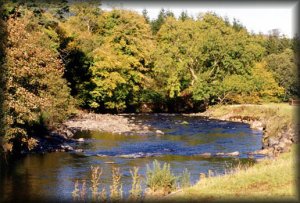
 glen. This estate has been designated an Area of Special Scientific Interest (ASSI)
and it has adopted an environmentally friendly policy to ensure the safety of
the glen's natural resources and wildness. As you travel down the glen from the
open moor lands of the Antrim Plateau you will enter a silent glen, the road
tunnelled by overhanging oak trees meanders down the side off the estate, you
will see a haven of wildlife with wild pheasants (I know I seen them on the
road), foxes and rabbits. The estate is home Aberdeen Angus/Cross suckler cattle
and mainly grey-faced ewes (sheep), it also caters for activities including open
days, shooting, river fishing, 4x4 off-road driving and corporate entertainment.
glen. This estate has been designated an Area of Special Scientific Interest (ASSI)
and it has adopted an environmentally friendly policy to ensure the safety of
the glen's natural resources and wildness. As you travel down the glen from the
open moor lands of the Antrim Plateau you will enter a silent glen, the road
tunnelled by overhanging oak trees meanders down the side off the estate, you
will see a haven of wildlife with wild pheasants (I know I seen them on the
road), foxes and rabbits. The estate is home Aberdeen Angus/Cross suckler cattle
and mainly grey-faced ewes (sheep), it also caters for activities including open
days, shooting, river fishing, 4x4 off-road driving and corporate entertainment.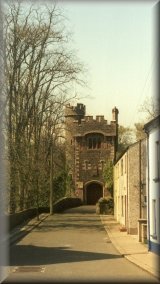 Glenarm is tiny village with narrow little
thoroughfares soaked in culture with friendly people, a forest walk and don't
miss Bill & Christina Steenson crafting their jewellery masterpieces in the
open workshop/showroom on the main street. The Barbican gate stands
proudly in one of the side streets as a reminder of the immense history that
surrounds the village.
Glenarm is tiny village with narrow little
thoroughfares soaked in culture with friendly people, a forest walk and don't
miss Bill & Christina Steenson crafting their jewellery masterpieces in the
open workshop/showroom on the main street. The Barbican gate stands
proudly in one of the side streets as a reminder of the immense history that
surrounds the village.
 Webmaster